Zapstore is an open Android app store. It gives Android users another way to discover, install, update, and support apps outside the traditional app-store model.
That is the short explanation.
The longer one starts with a problem:
Android is open. App distribution is not.
Android is technically an open platform.
You can install apps from outside Google Play. Developers can publish APKs directly. Users can use alternative stores, project websites, and everything else in the Android rabbit hole.
But for most people, the experience still feels… messy.
If an app is not in the default store, users end up jumping between different websites, repositories, or random forum pages.
At the same time, publishing through large app stores means accepting their rules, review processes, fees, and gatekeeping.
Android app distribution should not depend on a small number of platforms. There is a need for more direct ways for users and developers to find each other.
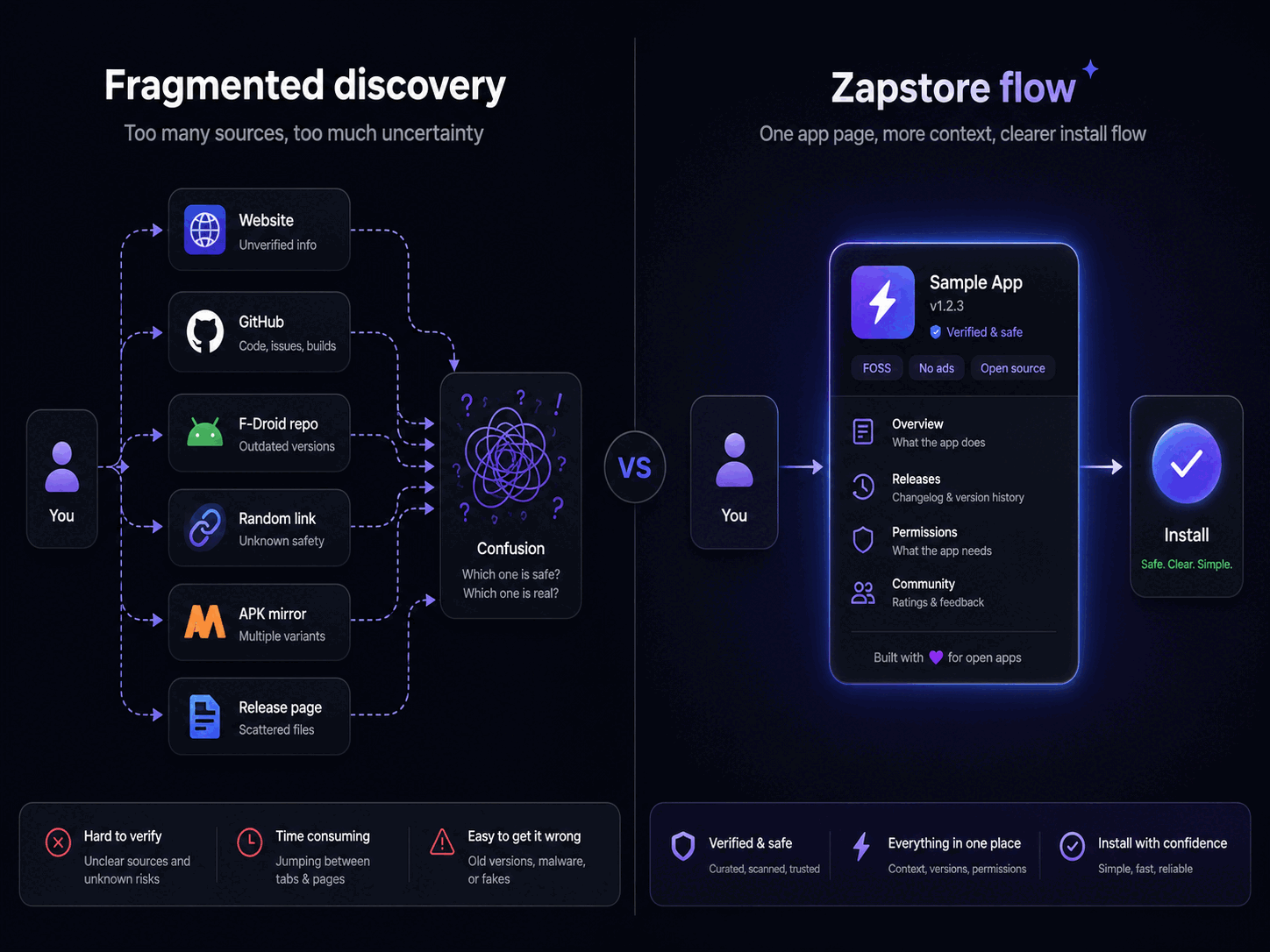
Zapstore takes a different approach.
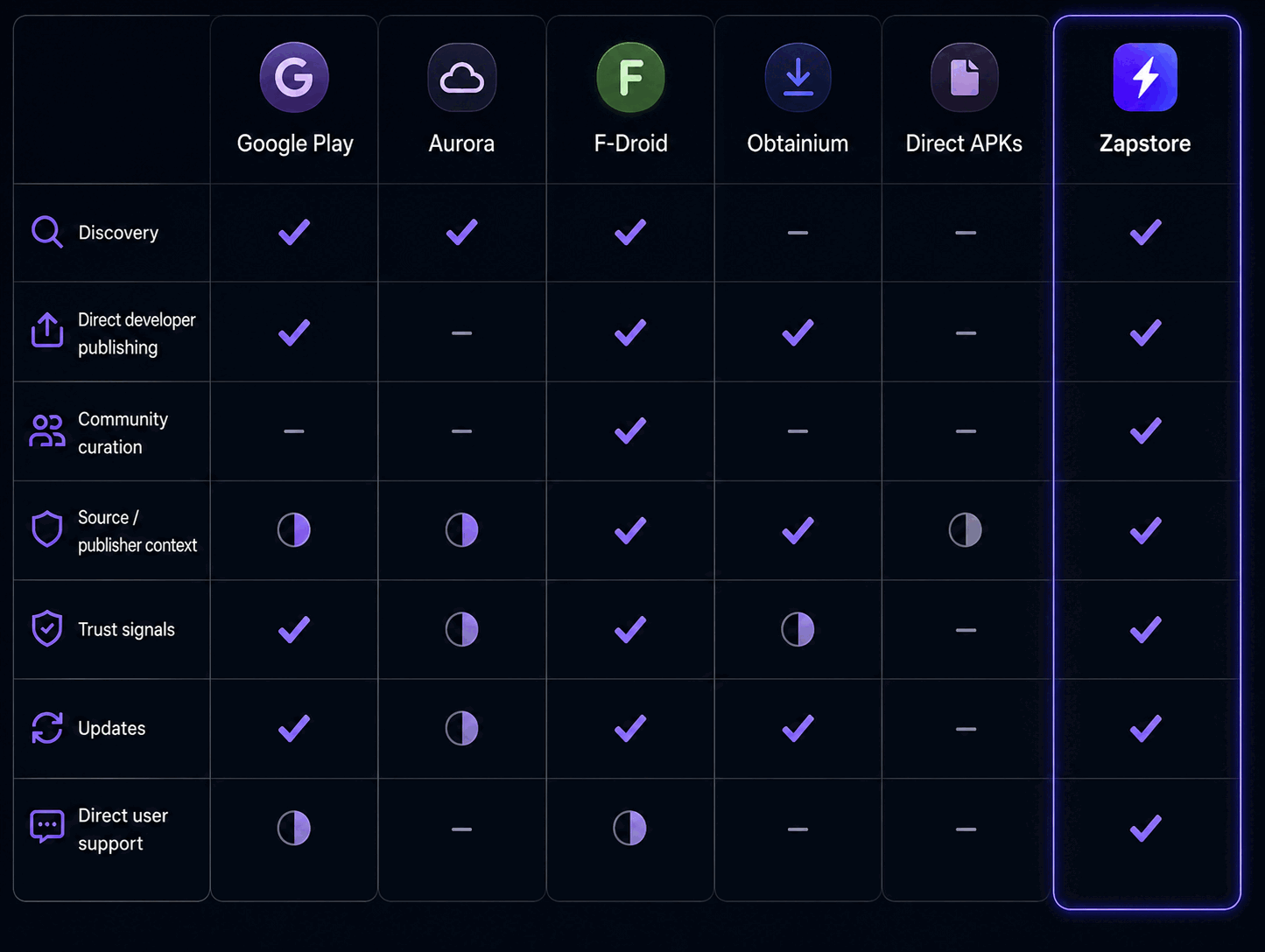
Google Play, F-Droid, Aurora, Obtainium, and direct APK downloads solve a real problem. Zapstore is not trying to replace them.
Google Play is convenient and familiar, but it is also centralized. Google controls review, policy, ranking, and distribution. Aurora Store gives users another way to access the Google Play catalog, but it still depends on that same catalog. F-Droid comes with its own repository model, build process, and update timing. Obtainium is for users who already know exactly which app they want and where it comes from. Direct APK downloads offer flexibility, but require users to find the right source, decide whether it is legitimate, and keep track of updates themselves.
Zapstore brings together discovery, direct developer publishing, community curation, source context, trust signals, updates, and direct support for developers in one place.
No app store can promise that every app is safe.
The biggest trust decision is often the first install.
Once an Android app is installed, Android normally prevents it from being updated by an APK signed with a different certificate. That gives users protection against silent replacement, but it does not remove the need to pay attention before installing something for the first time.
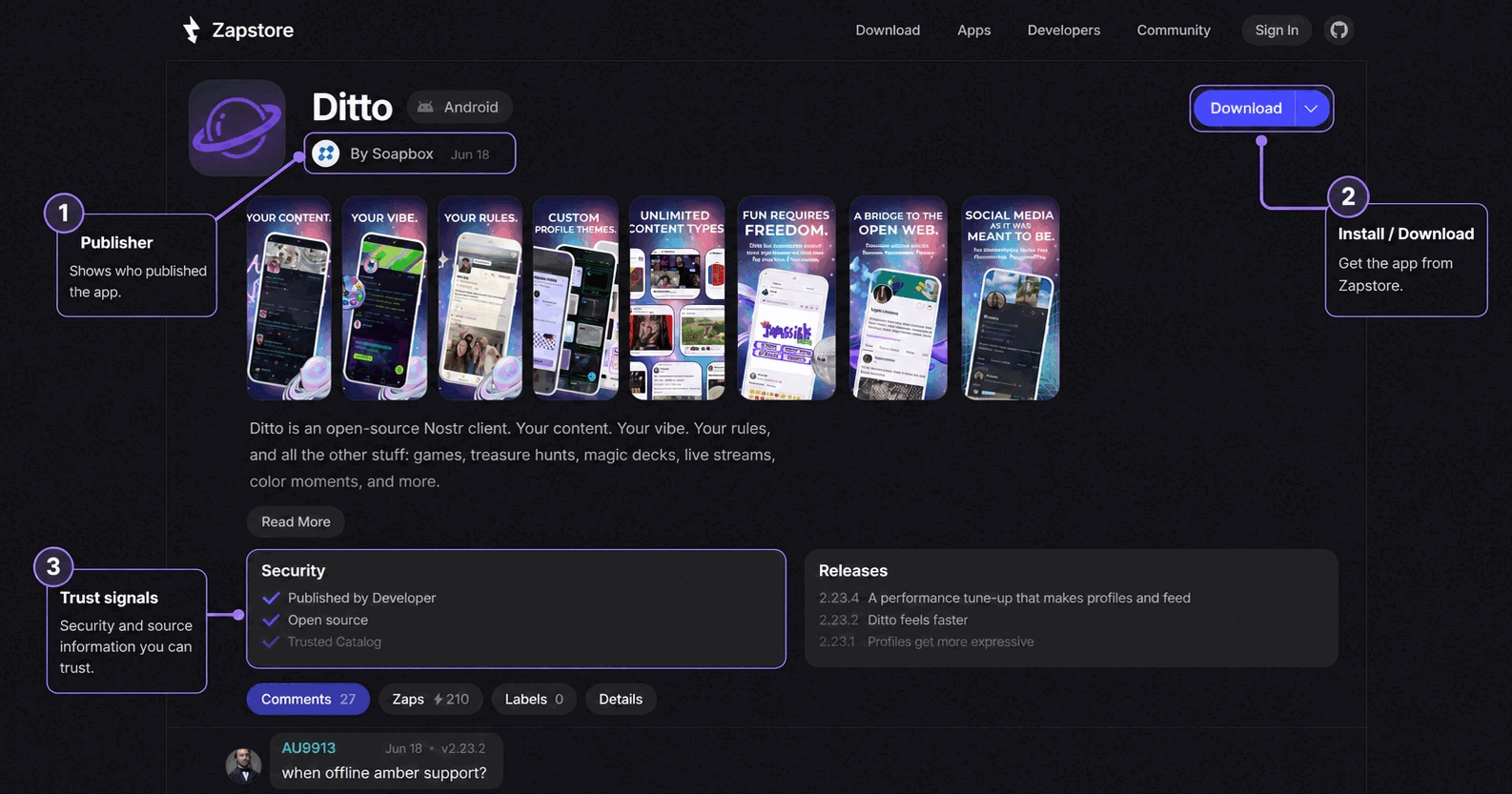
Zapstore provides users context before they install.
Instead of downloading a random APK and praying, Zapstore shows where an app comes from, who published it, what release information is available, and what signing information is attached to the app. In some cases, users can also see community activity, zaps, or other support signals.
This makes Android app discovery and distribution more understandable, and less dependent on a single gatekeeper.
Should I try Zapstore?
If you use alternative Android setups, you will probably recognize the problem quickly. You already know that Android is open, but finding, checking, installing, and updating apps outside the default store can still be fragmented.
That is the audience Zapstore is most useful for right now: Android power users, privacy and FOSS users, custom ROM users, freedom-tech users, and developers who publish APKs outside or alongside traditional app stores.
If you only install apps from Google Play, Zapstore will likely become useful later. But the early audience is people who already feel this friction.
Next steps
Zapstore is still early. There are rough edges. Some flows need better explanations. Some trust questions deserve careful answers. Some parts will improve as more users, developers, and communities participate.
If you care about Android apps outside the default store path, it is worth trying now.